Cool or Fool: Man with Four Nipples?

“In other countries, showing your faith can be more sacrificial in nature, where individuals endure extreme fasting, body piercing (or modifications), and other extreme physical acts of sacrifice”
“In other countries, showing your faith can be more sacrificial in nature, where individuals endure extreme fasting, body piercing (or modifications), and other extreme physical acts of sacrifice”

“Make sure you have eaten within 6 hours of getting pierced, otherwise, you are more prone to fainting…”
“Make sure that the company you purchase your body piercing supplies is fully licensed and that they make public their sterilization procedures and spore testing results so you know your piercing supplies are guaranteed sterile (in color-change indicating pouches) and are ready to use …”

“Unlike a tattoo, your body piercing will not fade, or change from it’s original likeness, ever. It’s not that a piercing or tattoo is any ‘better’ than the other, it’s just that they are intrinsically different when it comes to the passage of time.”
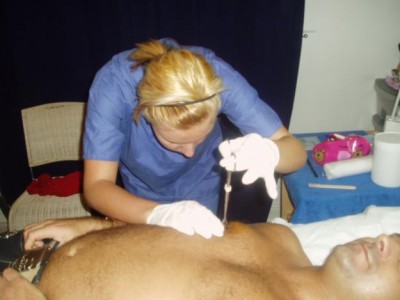
“Make sure that you have eaten a meal within the last four hours of getting pierced, and if you have a history of seizures or are prone to fainting, make sure you tell your piercer about it. Remember, body piercing should be routine and does not have to involve violent physical reactions.”

“Usually, disposable forceps are made of plastic and are disposed of after use, while steel forceps are designed to be able to withstand an autoclave so they can be reused…”
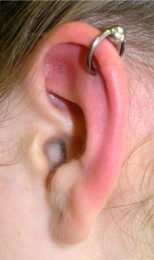
“This type of body piercing is quite common and can be done easily, usually without excessive bleeding involved. It takes between 8 to 12 weeks for this piercing to heal.”
“The most commonly performed of the two is the VCH piercing. This piercing is generally done by pulling back and upward on the tissue of the hood so that the clitoris is exposed and there is a ‘gap’ created that the needle can slide into so that it will pierce through the end of the hood, creating a vertical piercing that allows body jewelry to be worn the length of the hood.”

“Even if the only piercing a chick has (ears don’t count unless they’re stretched) is a nostril piercing, that’s enough to tingle the love antennae of any real man within 100 miles…”
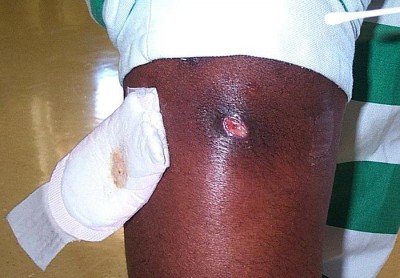
“MRSA (methicillin-resistant staphulococcus aureus) is a type of flesh-eating and rapid spreading staph infection that is resistant to most antibiotics (photo) usually caused by improper skin preparation before a body piercing or tattoo.”